

Bake stunning Pressed Flower Easter Shortbread with this easy recipe featuring edible blooms and buttery, melt-in-your-mouth texture for your spring brunch.
There is something inherently magical about the transition from winter to spring. As the frost melts away and the first hints of green emerge from the soil, our culinary cravings often shift from heavy, comforting stews to lighter, more whimsical treats. This Pressed Flower Easter Shortbread is the ultimate embodiment of that seasonal shift. Combining the timeless, buttery richness of a classic Scottish-style biscuit with the delicate, ephemeral beauty of garden blooms, these cookies are more than just a snack—they are a work of edible art. Whether you are hosting a formal Easter tea or simply looking for a creative project to do with the family, these cookies offer a sophisticated flair that is surprisingly simple to achieve.
The history of Shortbread dates back centuries, evolving from “biscuit bread” in medieval times to the refined, high-butter-fat treat we know today. Traditionally, it was a luxury reserved for special occasions like Christmas and Hogmanay. By introducing edible flowers into the mix, we are elevating this heritage recipe into a modern springtime staple. Using flowers like pansies, violas, and cornflowers not only adds a pop of color but also introduces subtle earthy and floral notes that complement the sweet creaminess of the dough. In this guide, we will explore everything from the science of the perfect “short” crumb to the delicate art of pressing blossoms so they retain their vibrant hues even after a trip to the oven.
Why This Recipe Works
The success of this Shortbread recipe lies in its structural integrity and its minimalist ingredient list. By focusing on high-quality fats and a specific ratio of sugar to flour, we create a base that is sturdy enough to hold a decorative flower but tender enough to dissolve on the tongue. Unlike sugar cookies, which often contain leavening agents like baking powder that cause the dough to rise and spread, this recipe is designed to stay flat and smooth. This creates a “blank canvas” that allows the intricate details of the pressed petals to shine without being distorted by bubbles or cracks.
Furthermore, the inclusion of cornstarch (or rice flour) in the dough helps to inhibit gluten development. This ensures that the texture remains “short”—the baking term for crumbly and tender—rather than chewy or tough. The visual appeal of the Pressed Flower Easter Shortbread is also a major factor; it taps into the “cottagecore” aesthetic that has taken the food world by storm, making it a social-media-ready dessert that tastes as good as it looks. It is a foolproof way to impress guests without needing advanced cake-decorating skills.
Ingredients
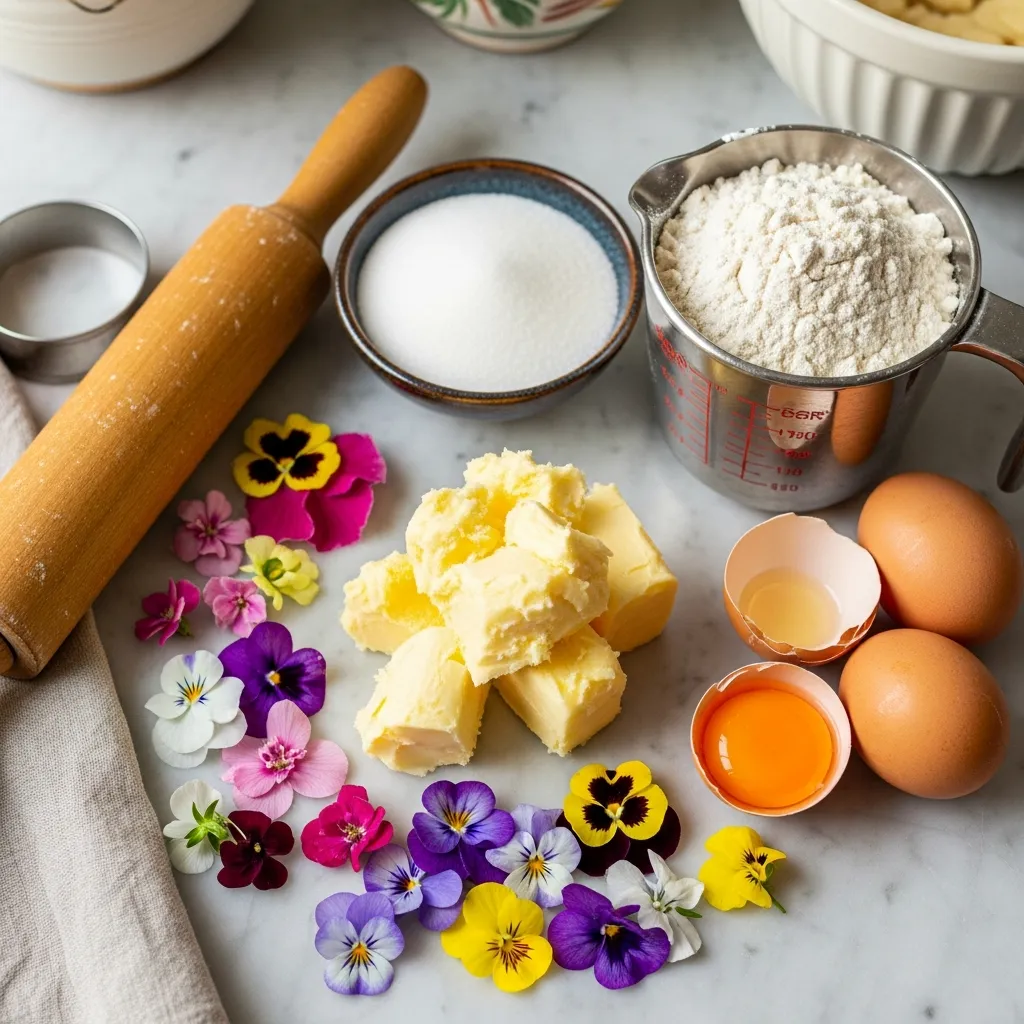
To ensure the best results, every ingredient in this Shortbread should be at its prime. Use European-style butter if possible, as it has a higher fat content and lower water content, leading to a richer flavor.
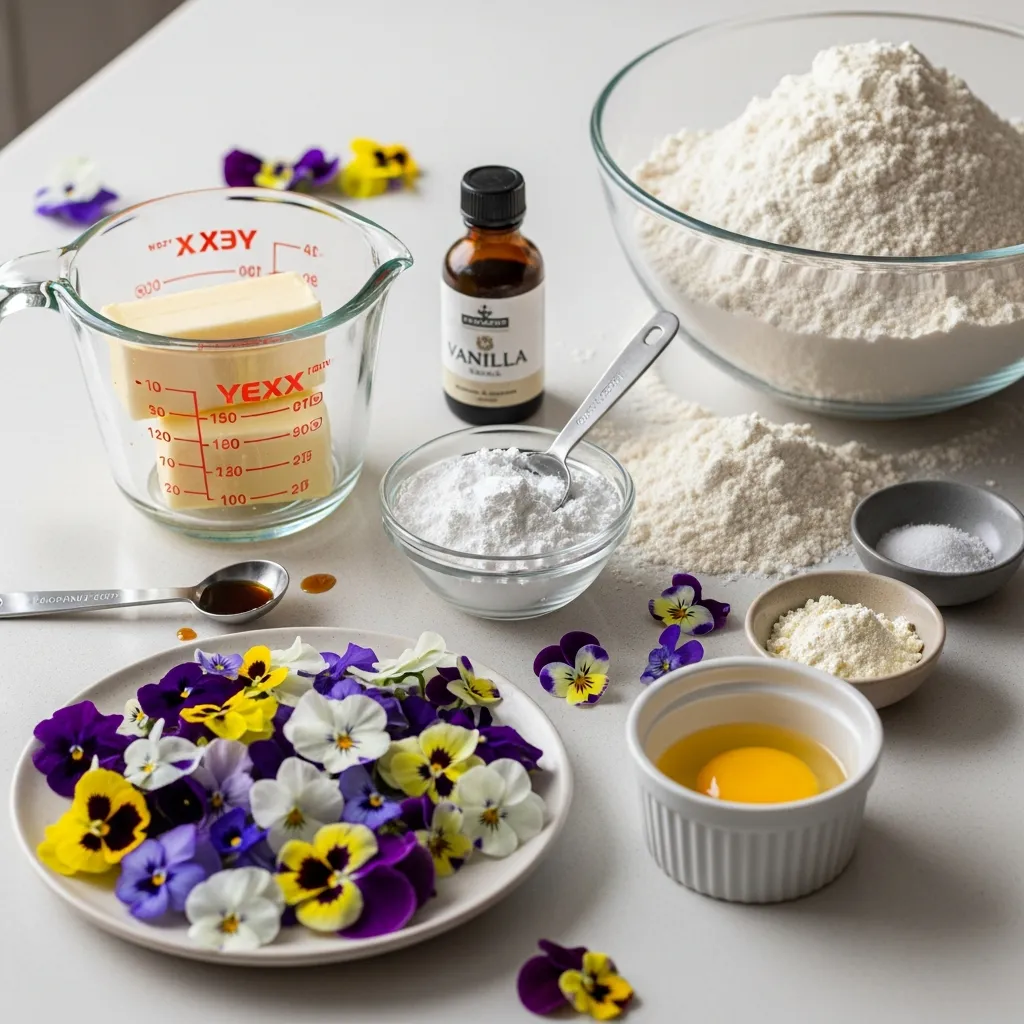
- Unsalted Butter: 1 cup (225g), softened to room temperature.
- Powdered Sugar: 3/4 cup (90g), sifted to avoid lumps.
- Vanilla Extract: 1 teaspoon of high-quality bean paste or extract.
- All-Purpose Flour: 2 cups (250g), measured correctly.
- Cornstarch: 1/4 cup (30g), for that signature melt-in-the-mouth texture.
- Salt: 1/2 teaspoon of fine sea salt to balance the sweetness.
- Edible Flowers: Pansies, violas, lavender, or rose petals (ensure they are pesticide-free).
- Granulated Sugar: 1 tablespoon for sprinkling (optional).
- Egg White: 1 small egg white, lightly beaten (used as “glue” for the flowers).
Equipment
You don’t need fancy machinery to make Shortbread, but a few specific tools will make the process much smoother and ensure your flowers stay intact.
- Electric Hand Mixer or Stand Mixer: To cream the butter and sugar effectively.
- Large Mixing Bowl: For combining the dry and wet ingredients.
- Rolling Pin: Preferably one with thickness rings to ensure an even 1/4-inch thickness.
- Cookie Cutters: Simple circles or fluted edges work best for showing off flowers.
- Parchment Paper: Essential for preventing sticking and for the “pressing” stage.
- Small Pastry Brush: To apply the egg white wash to the flowers.
- Heavy Book or Flat Tray: For pressing the flowers if you are using fresh ones.
Step by Step Guide
Follow these steps carefully to ensure your Pressed Flower Easter Shortbread comes out looking like it belongs in a professional bakery window.
- Prepare the Flowers: If using fresh edible flowers, place them between two sheets of parchment paper and press them under a heavy book for at least 30 minutes before baking. This flattens them so they don’t curl in the heat.
- Cream the Butter and Sugar: In a large bowl, beat the softened butter and powdered sugar together until smooth and creamy. Do not over-beat; you don’t want to incorporate too much air, which can cause the cookies to puff.
- Add Aromatics: Mix in the vanilla extract. If you want a citrus twist, you could also add a teaspoon of lemon zest here.
- Combine Dry Ingredients: Sift the flour, cornstarch, and salt into the butter mixture. Mix on low speed until a soft dough forms. It might look crumbly at first, but it will come together.
- Chill the Dough: Shape the dough into a flat disk, wrap in plastic, and refrigerate for at least 30 minutes. This prevents the Shortbread from spreading.
- Roll and Cut: Preheat your oven to 325°F (160°C). Roll the dough out on a floured surface to about 1/4-inch thickness. Use your cutters to create your desired shapes.
- Apply the Flowers: Place the cut dough onto a parchment-lined baking sheet. Lightly brush the back of a pressed flower with egg white and gently press it onto the center of the cookie.
- Bake: Bake for 12-15 minutes. The edges should be just barely golden; the top should remain pale.
- Cool: Let the cookies rest on the baking sheet for 5 minutes before transferring them to a wire rack to cool completely.
To Incorporate With
These floral cookies are the perfect accompaniment to a variety of spring beverages and desserts. For a classic pairing, serve them alongside a pot of Earl Grey or chamomile tea. The floral notes in the tea will harmonize beautifully with the edible blossoms on the cookie. If you are looking for more festive inspiration, consider browsing Pinterest for creative cookie display ideas.
For a more decadent spread, serve these cookies with a side of lemon curd or a light fruit mousse. They also make an excellent crust if crushed and used for raspberry cheesecake bases. If you’re planning a full dessert table, they sit beautifully next to other seasonal treats like matcha-themed cookies, which provide a lovely green contrast to the colorful flowers.
Varieties / Substitutions
The beauty of this Shortbread is its versatility. You can easily adapt the base recipe to suit different dietary needs or flavor preferences.
- Gluten-Free: Substitute the all-purpose flour with a 1-to-1 gluten-free flour blend. Ensure the blend contains xanthan gum for stability.
- Vegan Option: Use a high-quality vegan butter block (not tub margarine) and swap the egg white “glue” for a tiny bit of agave syrup or light corn syrup.
- Flavor Infusions: Add 1 tablespoon of culinary lavender to the dough, or swap the vanilla for almond extract for a nutty profile.
- Chocolate Dipped: Once cooled, dip half of the cookie in melted white chocolate to add an extra layer of sweetness and elegance.
Tips for Success
To ensure your Shortbread is “SEO-perfect” and palate-perfect, keep these professional tips in mind:
- Temperature is Key: If your dough gets too warm while rolling, the butter will leak out, leading to a greasy cookie. Don’t be afraid to put the dough back in the fridge for 10 minutes mid-process.
- Flower Selection: Only use flowers that are confirmed to be edible. Common safe choices include pansies, violas, marigolds, cornflowers, and dianthus. Avoid florist flowers as they are often treated with chemicals.
- Sifting: Always sift your powdered sugar and flour. Because this recipe has so few ingredients, any lumps will be very noticeable in the final texture.
- Even Thickness: Use rolling pin spacers. If one side of the cookie is thinner than the other, it will brown unevenly, potentially scorching the delicate petals.
- Low and Slow: Baking at 325°F (160°C) rather than the standard 350°F helps preserve the color of the flowers. High heat can turn bright purple pansies into a dull brown.
For more inspiration on how to work with delicate doughs, you can search for similar recipes on AllRecipes to see different shaping techniques. You can also find professional decorating tips by visiting Food.com’s edible flower guide.
10 FAQ
- Can I use dried flowers instead of fresh? Yes, but ensure they are culinary-grade dried flowers. They may be slightly more brittle, so handle them with care.
- How long do these cookies stay fresh? In an airtight container, they will stay delicious for up to 7 days.
- Do the flowers taste like anything? Most edible flowers have a very mild, slightly grassy or minty flavor that doesn’t overpower the butter.
- Can I freeze the dough? Absolutely. Wrap it tightly and freeze for up to 3 months. Thaw in the fridge before rolling.
- Why did my flowers turn brown? This usually happens if the oven is too hot or the cookies are baked for too long. Try reducing the temperature by 10 degrees.
- Do I have to use egg white? No, a tiny drop of water or honey can also work to stick the flowers down, but egg white provides the most invisible “glue.”
- Can I use granulated sugar instead of powdered? Powdered sugar provides a finer, more tender crumb. Granulated sugar will make the Shortbread crunchier and more porous.
- Where can I buy edible flowers? Look in the herb section of high-end grocery stores, or check specialty online produce vendors.
- Is cornstarch necessary? It isn’t strictly necessary, but it is the secret to getting that professional “melt-in-your-mouth” quality.
- Can I make these in advance? Yes, you can bake them 2-3 days ahead of your event. They hold their shape and beauty very well.
Conclusion
Mastering the Pressed Flower Easter Shortbread is a rewarding endeavor that brings the beauty of the garden directly to your dessert table. These cookies prove that you don’t need a long list of ingredients to create something truly spectacular. By focusing on the quality of your butter and the delicate application of nature’s most beautiful blooms, you create a treat that is as memorable as the holiday itself. Happy baking, and may your Easter be filled with color, flavor, and perfectly crumbly biscuits!
PrintPressed Flower Easter Shortbread: 7 Secret Tips for the Perfect Cookie
- Total Time: 1 hour
- Yield: 24 cookies 1x
Description
A sophisticated and buttery shortbread recipe featuring beautifully pressed edible flowers, perfect for Easter celebrations and springtime tea parties.
Ingredients
- 1 cup unsalted butter, softened
- 3/4 cup powdered sugar
- 1 tsp vanilla extract
- 2 cups all-purpose flour
- 1/4 cup cornstarch
- 1/2 tsp sea salt
- Assorted edible flowers (pansies, violas)
- 1 egg white
Instructions
- Press edible flowers between parchment paper for 30 mins.
- Cream butter and powdered sugar until smooth.
- Mix in vanilla, then fold in flour, cornstarch, and salt.
- Chill dough for 30 minutes.
- Roll dough to 1/4-inch and cut into shapes.
- Brush flowers with egg white and press onto dough.
- Bake at 325°F for 12-15 minutes until set.
- Cool on a wire rack.
Notes
High visual impact, melt-in-your-mouth texture, easily customizable flavors.
- Prep Time: 45 minutes
- Cook Time: 15 minutes
Nutrition
- Calories: 145 kcal